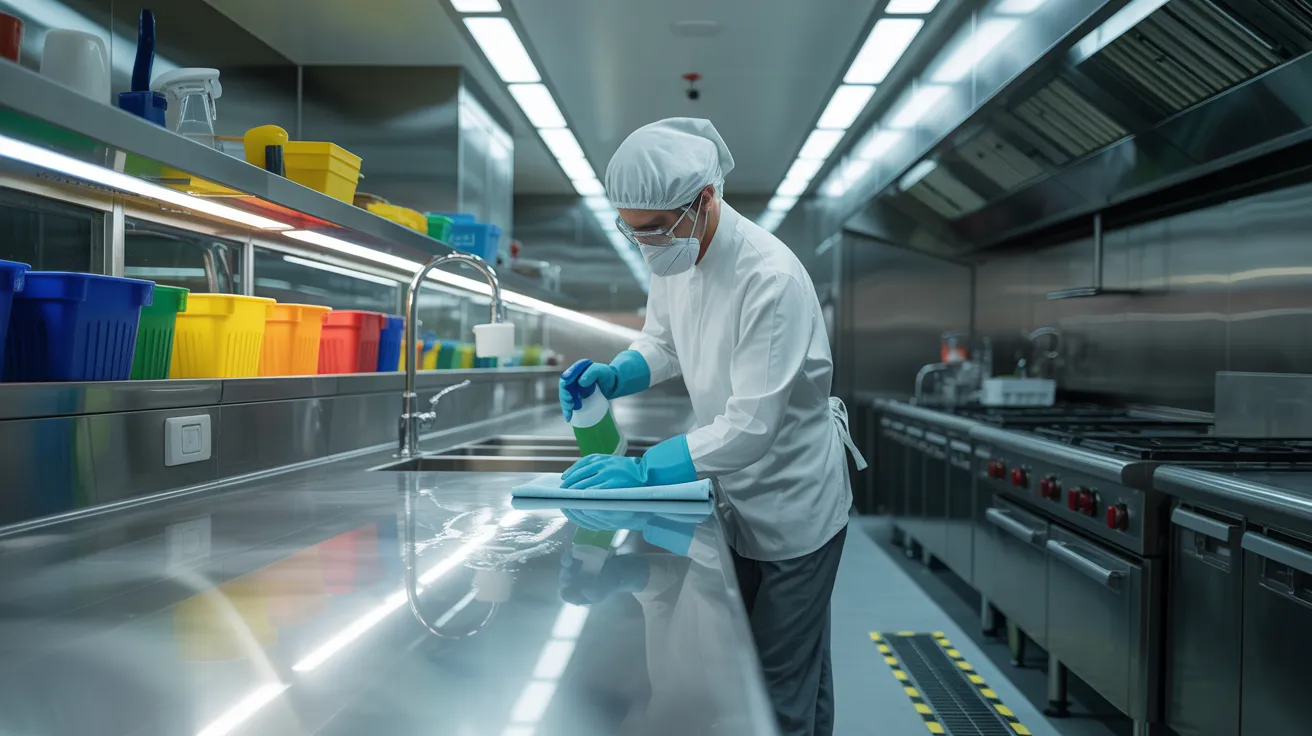
Professional food safety experts located in Brampton help maintain food service establishments, food distribution facilities, bakeries, warehouses, and mobile food units to sanitation standards. They treat high-touch surfaces, food prep surfaces, equipment, floors, drains, restrooms, and preparation zones using approved sanitizers, at proper strength, and using documented contact periods.
Important Highlights
- Food safety cleaning experts in Brampton support restaurants, grocery departments, commissaries, warehouses, bakeries, schools, mobile vendors, and allergen-sensitive operations.
- High-touch surfaces, food-contact equipment, kitchens, floors, drains, restrooms, and storage areas are disinfected using area-specific procedures to avoid cross-contamination.
- Trained vendors validate proper chemical concentration, alignment, and contact time, then document conclusion with tests, assessments, and action records.
- Proper cleaning schedules consider risk, output capacity, changeovers, spills, and standards when assigning daily, recurring, and annual tasks by zone.
- Highlight suppliers demonstrating HACCP, health regulatory competency, safety training instruction, insurance, testimonials, color-coded equipment, and assessment-ready maintenance records.
Brampton Venues That Need Food Safety Cleaning: Which Ones?
Any Brampton facility that manages, stores, prepares, packages, or serves food needs food sanitation. You must apply it if your facility falls under public health inspection, food premises regulations, or internal HACCP-based controls. That requirement covers restaurants, cafeterias, commissaries, grocery food departments, butcher shops, seafood counters, convenience stores, and institutional kitchens.
Compliant food safety cleaning is equally essential in storage warehouses, production plants, freezer facilities, bakeries, school nutrition services, reception halls, and meal delivery centers. Temporary and mobile businesses matter too, examples including mobile kitchens, market vendors, and seasonal booths. Your facility requires recorded sanitation procedures when your workers process ingredients, portion ready-to-eat items, reheat products, or store allergens. In Brampton, hygiene remains not voluntary; it constitutes statutory, functional, and public health standards.
What Do Brampton Cleaning Experts Clean?
You need professional cleaners who sanitize high-touch surfaces, kitchens, floor surfaces, and restrooms to comply with food safety and health regulations. They target these areas because they present the highest risk for cross-contamination, slipping risks, and hygiene violations.
When you understand what they clean, you can ensure your operation's cleaning procedures satisfy compliance and operational standards.
Key High-Touch Surface Disinfection
set how regularly each point is sanitized
Maintaining a directional workflow, rotating cleaning materials, and dividing cleaning supplies according to location ensures that cleaning remains documented, documented, and audit-prepared consistently
Cooking Zones, Walking Surfaces, and Restroom Environments
Brampton cleaning professionals will address kitchens, floors, and restrooms since each space presents different food safety concerns, slip-and-fall, and public health challenges. In industrial kitchens, you need grease removal from cooking stations, appliance surfaces, drain systems, preparation areas, and backsplashes to minimize bacterial growth and pest activity.
Professional floor care with documentation is also included. is also provided as part of the service.
Restroom cleaning requires disinfecting touchpoints, fixtures, partitions, dispensers, and waste containers, restocking supplies and controlling odours. They also service restaurant moprooms, where chemical storage, sink hygiene, and drainage conditions can affect sanitation compliance and staff safety daily.
The Importance of Food Safety Cleaning in Brampton
To adhere to regulatory mandates and pass inspections, Brampton facilities must maintain appropriate cleaning protocols. You also minimize bacterial spread through proper cleaning of food-preparation surfaces, appliances, and frequently-touched items. Most importantly, you safeguard community wellness by reducing the chance of food poisoning in your establishment.
Regulatory Code Requirements
Because Brampton food companies operate under rigorous sanitary regulations, food safety cleaning directly affects your ability to meet health code requirements, ensure the safety of customers, and eliminate enforcement action. You must maintain hygienic food handling zones, recorded sanitation plans, safe chemical management, and traceable training practices that meet municipal and provincial inspection expectations.
Should your cleaning standards slip, you encounter notices, corrective directives, reputational harm, and potential service disruption during follow-up inspections or enforcement actions.
Cross-Contamination Prevention
Maintaining health code standards copyrights on your capacity to prevent cross-contamination during daily food handling and cleaning. You must separate raw ingredients from ready-to-eat foods, sterilize work zones between assignments, and store chemicals away from food-contact items. Explicit protocols lower contamination threats and support consistent compliance during inspections.
Implementing allergen segregation helps keep priority allergens from contacting communal work zones, bins, or devices. Deploy dedicated cutting boards, color-coded tools, and clear tool marking so staff don't mix items during preparation or service. Enforce hand hygiene following raw meat, seafood, eggs, or allergen-containing products. Refresh cleaning cloths often, and validate disinfectant levels using test strips. When you train staff to follow these controls every shift, you establish a more hygienic, safer workplace that meets Brampton's food safety expectations daily.
Public Health Safeguarding
Should cleaning standards break, you don't simply encounter inspection problems—you increase the potential of foodborne illness impacting customers, staff, and the wider Brampton community. You also weaken your role in protecting public health, especially in high-traffic food premises where pathogens travel quickly through surfaces, equipment, and touchpoints.
You need cleaning protocols that eliminate soils, sanitize effectively, and validate outcomes. This requires following contact periods, selecting approved disinfectants, logging schedules, and coaching employees to satisfy regulatory requirements. These controls promote illness spread by minimizing pathogens before reaching surfaces or food. Throughout Brampton, effective sanitation protects vulnerable communities, minimizes disease potential, and proves accountability. When you follow proper protocols, you go beyond requirements—you mitigate risk and enable safer food service throughout the area.
Why Is Cleaning Essential for Food Safety Compliance?
Maintaining thorough cleaning protocols ensures food safety compliance by decreasing contamination threats, limiting pathogen development, and keeping your facility aligned with sanitation requirements under HACCP-based programs and public health regulations. You validate that contact surfaces stay visibly clean and microbiologically controlled, backing documented preventive controls and inspection readiness.
Diligent cleaning also enhances allergen mitigation by clearing residues that can lead to undeclared allergen exposure. When you integrate validated sanitation procedures with regulatory training, your staff can follow standardized methods, handle approved chemicals correctly, maintain records thoroughly, and respond to irregularities prior to problems worsen. Consistent cleaning enables product tracking, verifies remedial measures, and demonstrates accountability throughout audits. Moreover, it supports you preserve product integrity, preserve operational compliance, and decrease the risk of enforcement actions, mass recalls, formal complaints, and preventable public health risks.
How Should You Plan Commercial Cleaning Work?
Ramp up cleaning rate during peak output, product changeovers, spill incidents, and following maintenance work.
risk factors, production capacity, or regulatory requirements are updated
How Do You Choose Brampton Cleaning Experts?
Evaluate providers first by sanitation compliance standards rather than cost. You must ensure each provider understands CFIA, public health, and HACCP-aligned expectations for your business. Request proof of insurance, WHMIS compliance, staff training documentation, and supervision methods. Check technician awareness of contamination prevention, chemical safety, and traceable sanitation records.
Additionally, you need to evaluate operational reliability and responsibility. Obtain references from food facilities in Brampton, then review response times, corrective-action procedures, and communication practices. Verify the company conducts supplier reviews and can deliver compliance-ready records when inspectors or external parties need proof. Verify equipment upkeep, color-coded equipment are applied correctly, and site-specific hazards are identified. A capable service protects compliance, product integrity, and your reputation.
What details should a sanitation plan contain?
Create a documented strategy that defines every sanitation duty, guideline, and expectation before production starts. You should list cleaning frequencies, approved chemicals, dilution rates, contact times, tools, and verification methods for each zone, surface, and piece of equipment. Don't forget to add pre-operational inspections, corrective actions, and employee training requirements.
Your plan should also include cross-contamination controls, waste handling, pest-prevention measures, and documented schedules for restrooms, drains, floors, and food-contact areas. Specify how you'll separate raw and ready-to-eat processes, help with ingredient tracking, and copyright accurate allergen labeling through validated cleaning between product changes. You should define accountability, preserve signed records, and check results against regulatory standards, HACCP controls, and customer requirements. When gaps appear, adjust procedures immediately and re-educate staff.
Commonly Asked Inquiries
Will sanitation providers manage overnight shifts at Brampton facilities?
Yes, you can contract sanitation providers to manage nighttime operations in Brampton facilities. You'll manage overnight sanitation around production schedules, security controls, and staffing levels. Services typically outline nightshift logistics to minimize interruption, maintain standards, and log completed work. You should verify response times, management, access procedures, and waste management before service starts.
Will sanitation professionals address hazardous incidents?
Yes, you can discover many Brampton sanitation experts providing hazard containment options. They handle hazardous incidents, evaluate risks, contain affected zones, and begin swift decontamination to reduce risk and avoid operational impact. You should verify response rates, certifications, safety protocols, and waste procedures. If your facility must adhere to regulations, pick a provider that documents events, adheres to standards, and supports verification.
Are environmentally safe disinfectants safe for food-contact surfaces?
Definitely, natural disinfectants perform safely on food-contact surfaces if you select disinfectants approved for food contact that meet regulatory compliant. You must confirm contact times, dilution ratios, and rinse protocols ahead of deployment. Botanical formulations lower toxic chemical contact, but you require demonstration of efficacy against relevant pathogens. To ensure residue free surfaces, follow precise manufacturer instructions and verify your cleaning agent satisfies food industry regulations.
Do maintenance plans enable production fluctuations?
Absolutely, maintenance plans are customizable for seasonal variations. Adjust frequencies, staffing, disinfectants, and testing procedures to correspond to seasonal workflows while upholding regulatory compliance. Decrease operational delays through scheduling sanitization during equipment transitions, high demand periods, and operational patterns. Additionally, update standard operating procedures, employee training, and environmental testing to reflect periodic risks, emerging allergens, or increased soil loads. Ongoing evaluations preserve your program functional.
Are professional cleaning companies offering staff training on sanitation best practices?
Indeed, professional cleaners typically provide staff training on sanitation best practices. Your learn more team receives instruction on proper chemical use, contact times, cross-contamination prevention, equipment breakdown, and documentation. They generally adhere to training with HACCP, GMP, and CFIA or local public health criteria. Many perform compliance inspections to confirm standards, reveal issues, and strengthen improvement measures. This assists you to establish reliable processes, pass inspections, and reduce food safety risks on a daily basis.
Final Thoughts
Through engaging Brampton commercial cleaning and food safety experts, you do far more than tidy—you keep your operation prepared for inspections and your standards meet requirements. From kitchen spaces to processing areas, all maintained surfaces and organized zones help prevent pest problems and avoid major losses. Through booking service at proper intervals and adhering to a comprehensive cleaning program, you safeguard your team, clients, and your good name. Within strict regulatory frameworks, proper sanitation must be a priority—they represent good business practice.